Photonics, Tyndall National Institute
Laser Power Transmission
Powering circuits with light: a 450nm laser power link that drives CMOS electronics at 18% efficiency, using ordinary LEDs as photovoltaic cells.
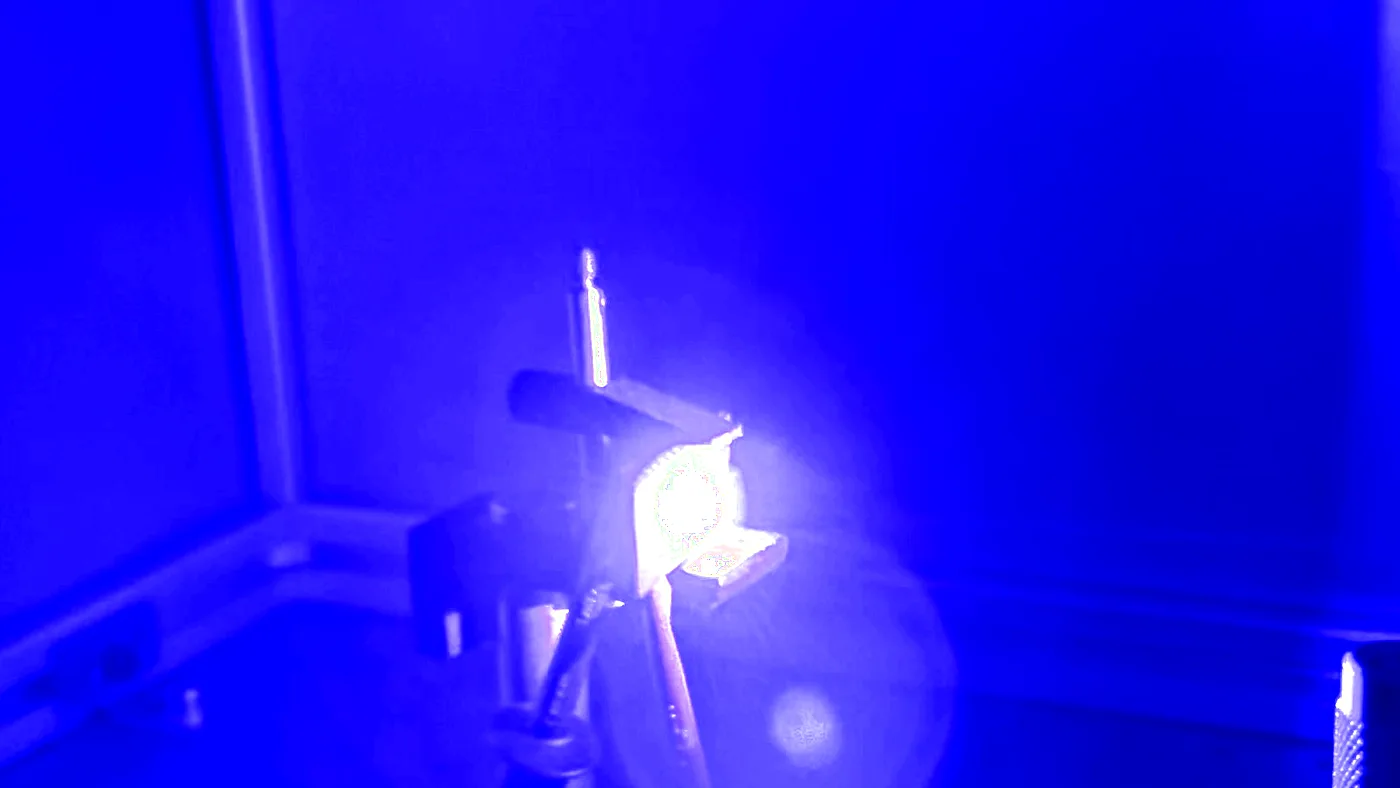
- laser wavelength
- 450nm
- laser-to-CMOS efficiency
- 18%
- optical data link demonstrated
- 5KB/s
- modeled link distance at 1MB/s+
- 40km
The idea
Some places are awkward to get power into: implants, sealed sensors, spinning machinery, anywhere a wire or a battery is the failure point. Optical power transfer sends energy as a laser beam instead, and the receiving side converts it back to electricity.
The twist in this project is the receiver. Instead of custom photovoltaic cells, it uses ordinary LEDs run in reverse, exploiting the fact that a diode that emits light will also absorb it. LEDs are cheap, robust, and tuned to narrow wavelengths, which makes them a surprisingly good match for a single-wavelength laser source.
Characterised, then modeled
I automated the characterisation rig with Python: IV sweeps, absorption spectra, and power conversion curves across candidate LEDs from Lumileds and Osram, then built SPICE models of each receiver and validated them against the measurements.
The models track measured electrical power closely across the operating range, which made it possible to design the rest of the system, regulation, load, and the eventual CMOS target, in simulation before touching the bench.
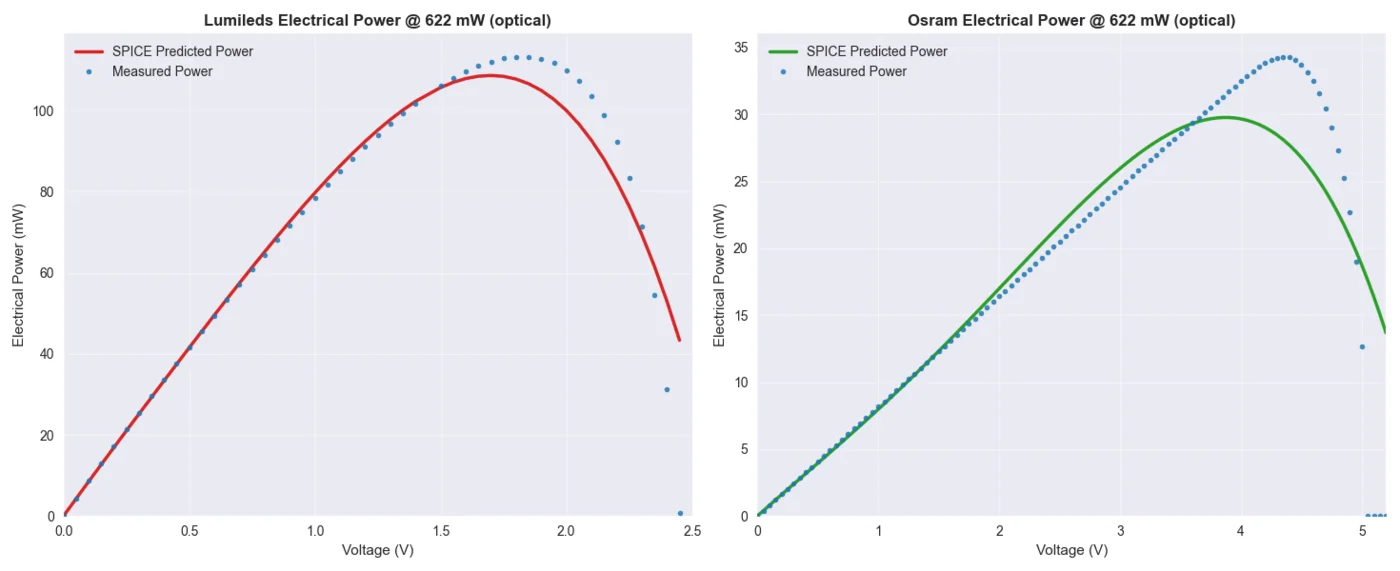
SPICE-predicted against measured power for both receiver candidates at 622mW optical input.
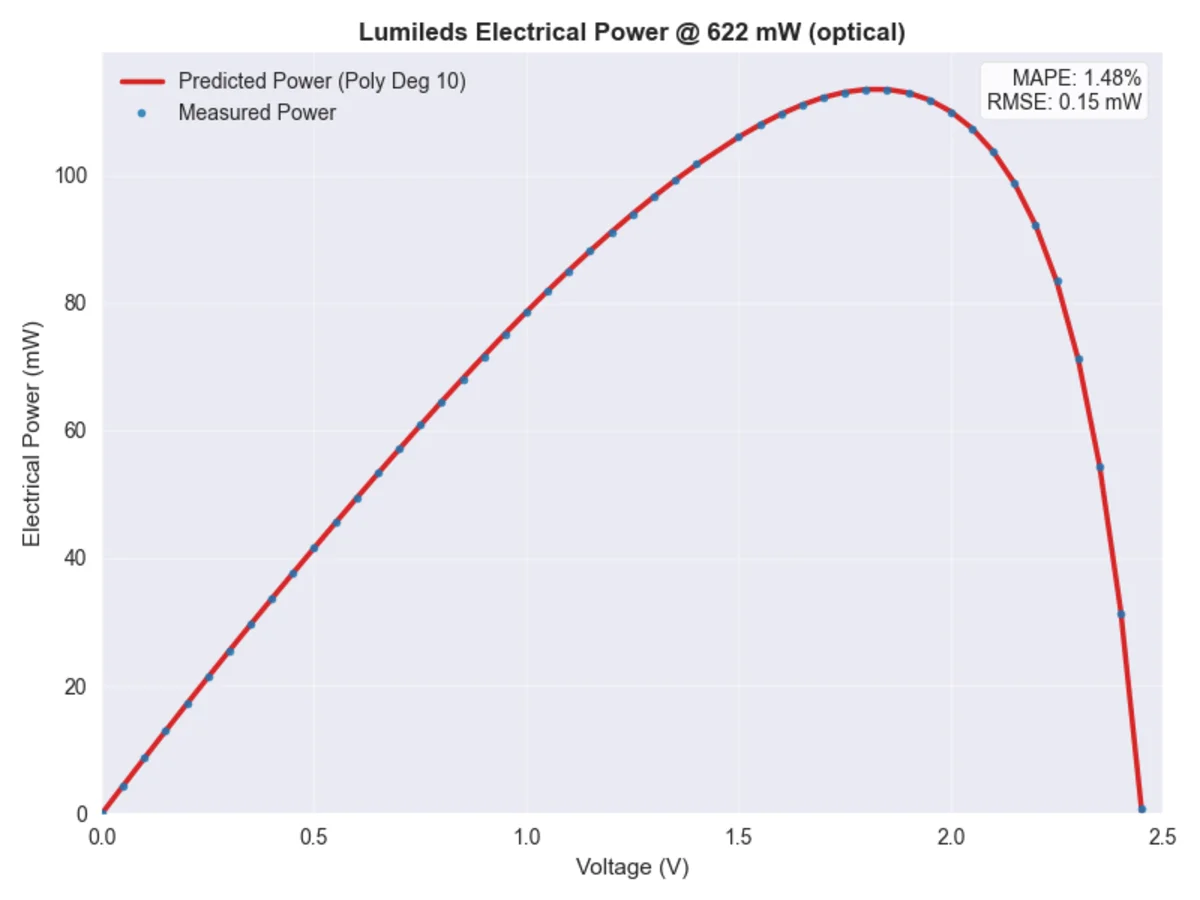
The receiver power model lands within 1.48% mean error of measurement.
Power, plus data
Driving a circuit is only half the story; the same beam can carry information. By modulating the laser, the link delivered a 5KB/s optical data channel while still powering the receiver, demonstrated end to end with the LED successfully switched by the transmitted signal.
Modelling suggests the approach scales a long way: with better emission-absorption overlap and direct fibre coupling, the path leads to beyond 1MB/s over 40km. I also designed thermoelectric stabilisation for the laser to hold the wavelength steady as it heats.
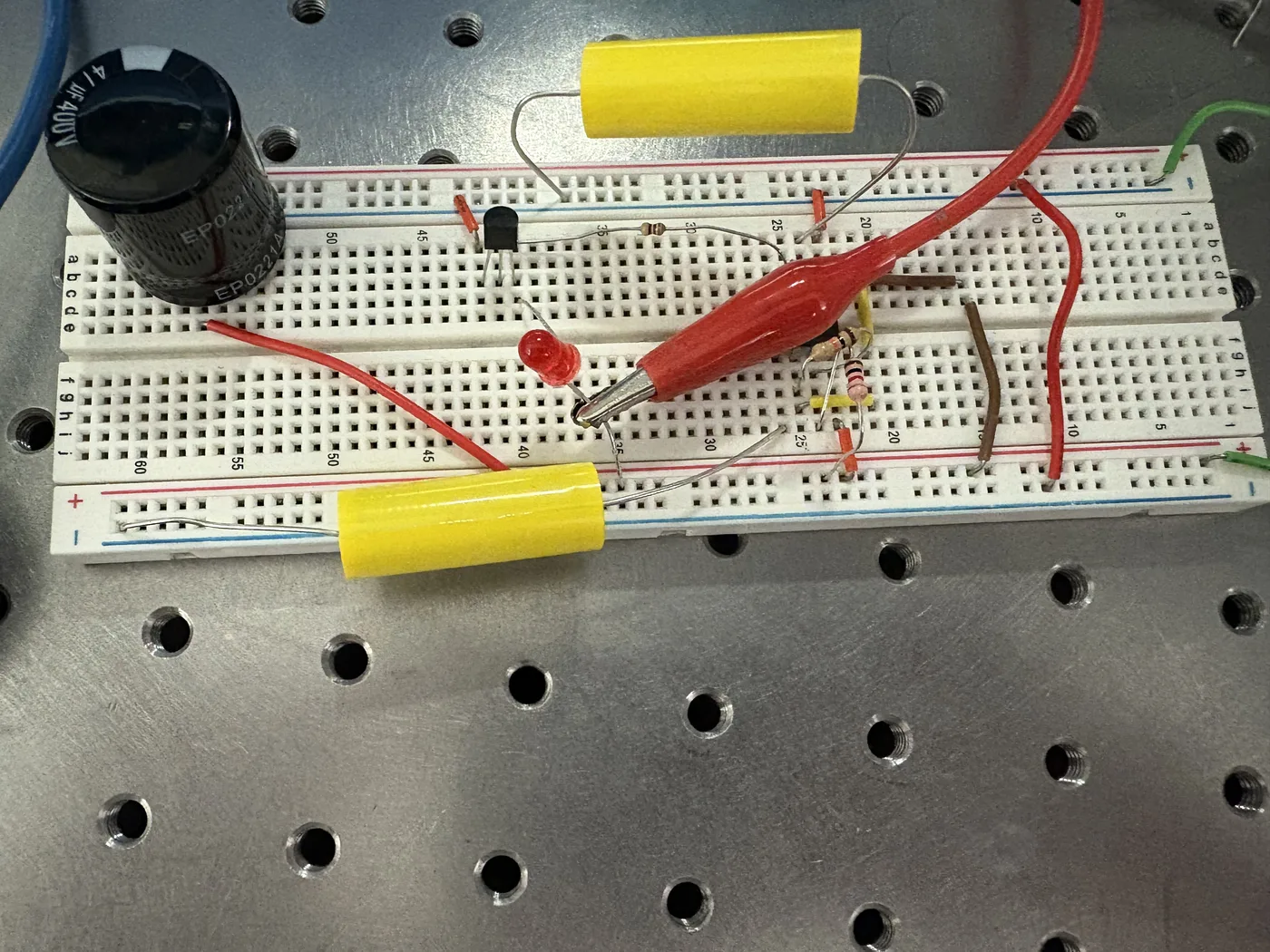
On the bench
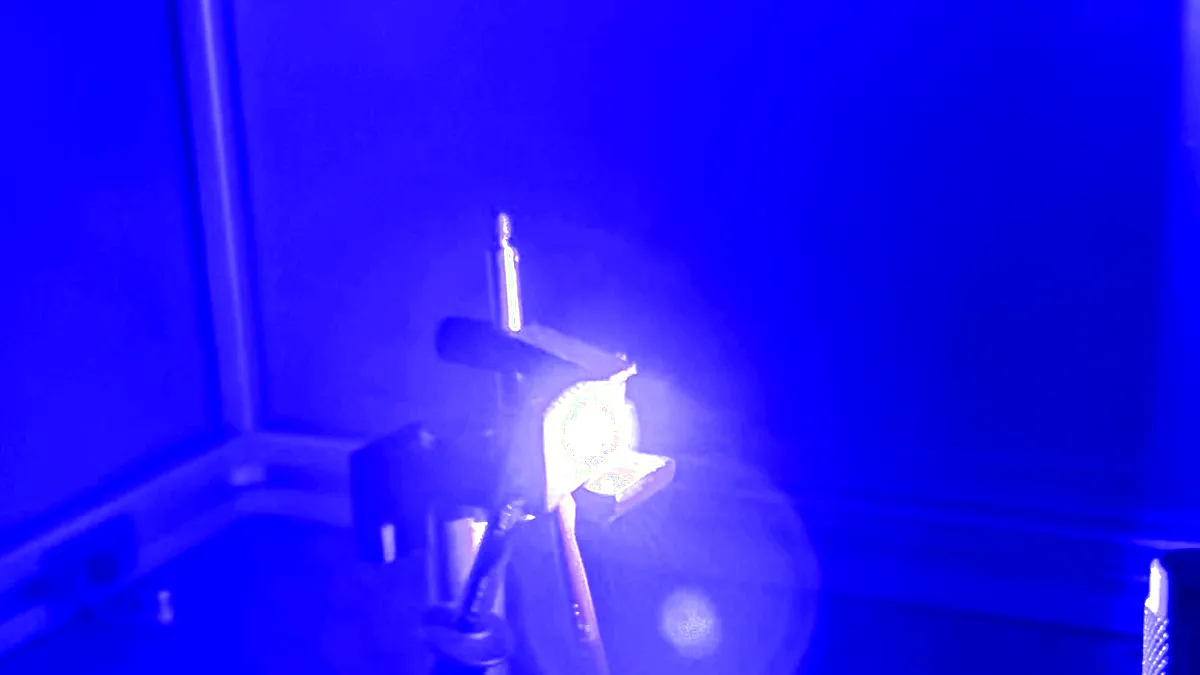
Photonics Ireland
The work was accepted as a poster at the Photonics Ireland conference, where I presented the receiver characterisation, the SPICE-validated link model, and the data-over-power demonstration.
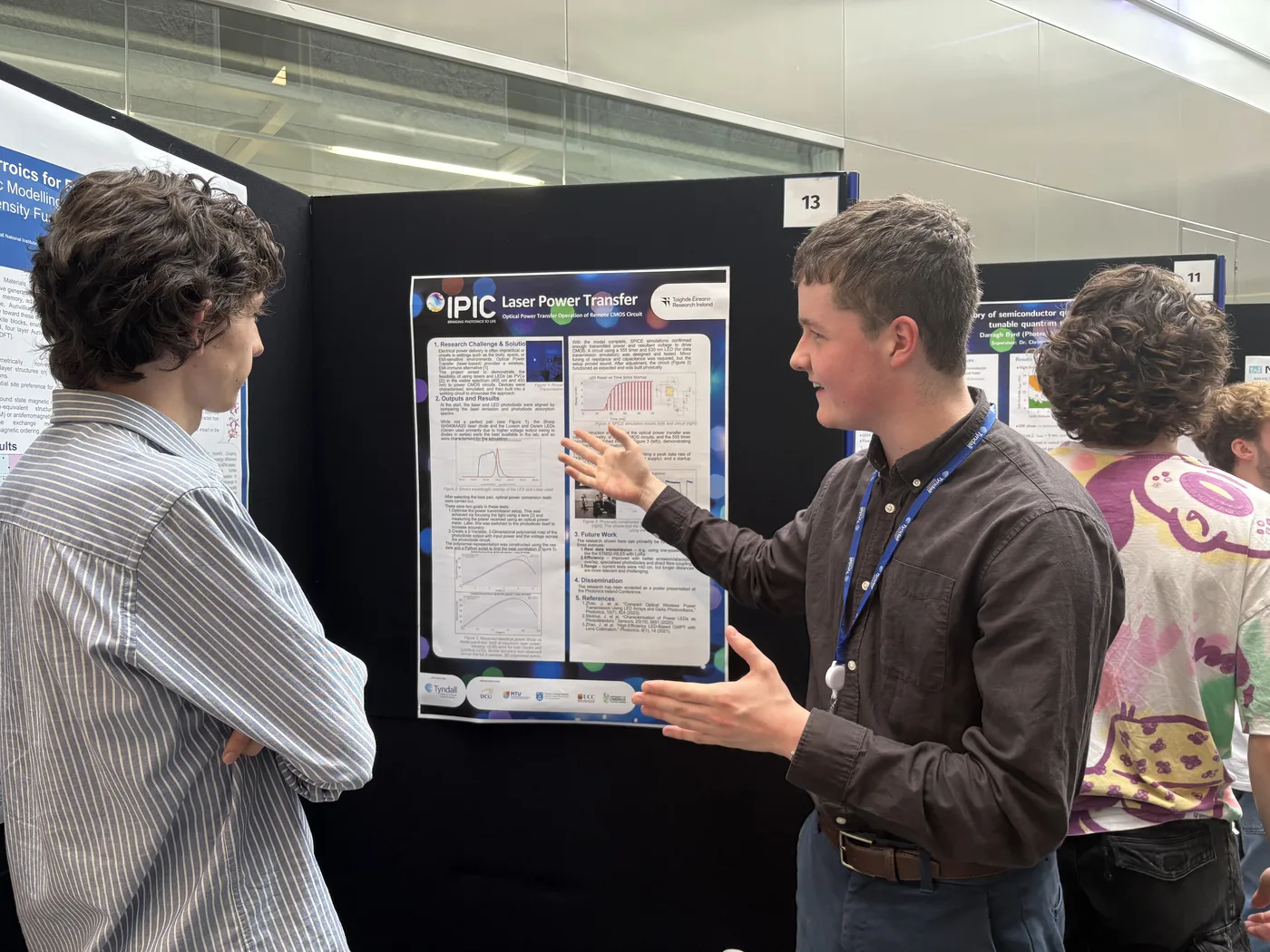
Walking a visitor through the link budget at Photonics Ireland.