AI study companion, built under Eltrus
StudySmith
An AI tutor that turns your own material into a structured path: deliberate practice, reflection, and spaced mastery, all driven by a multi-LLM pipeline.
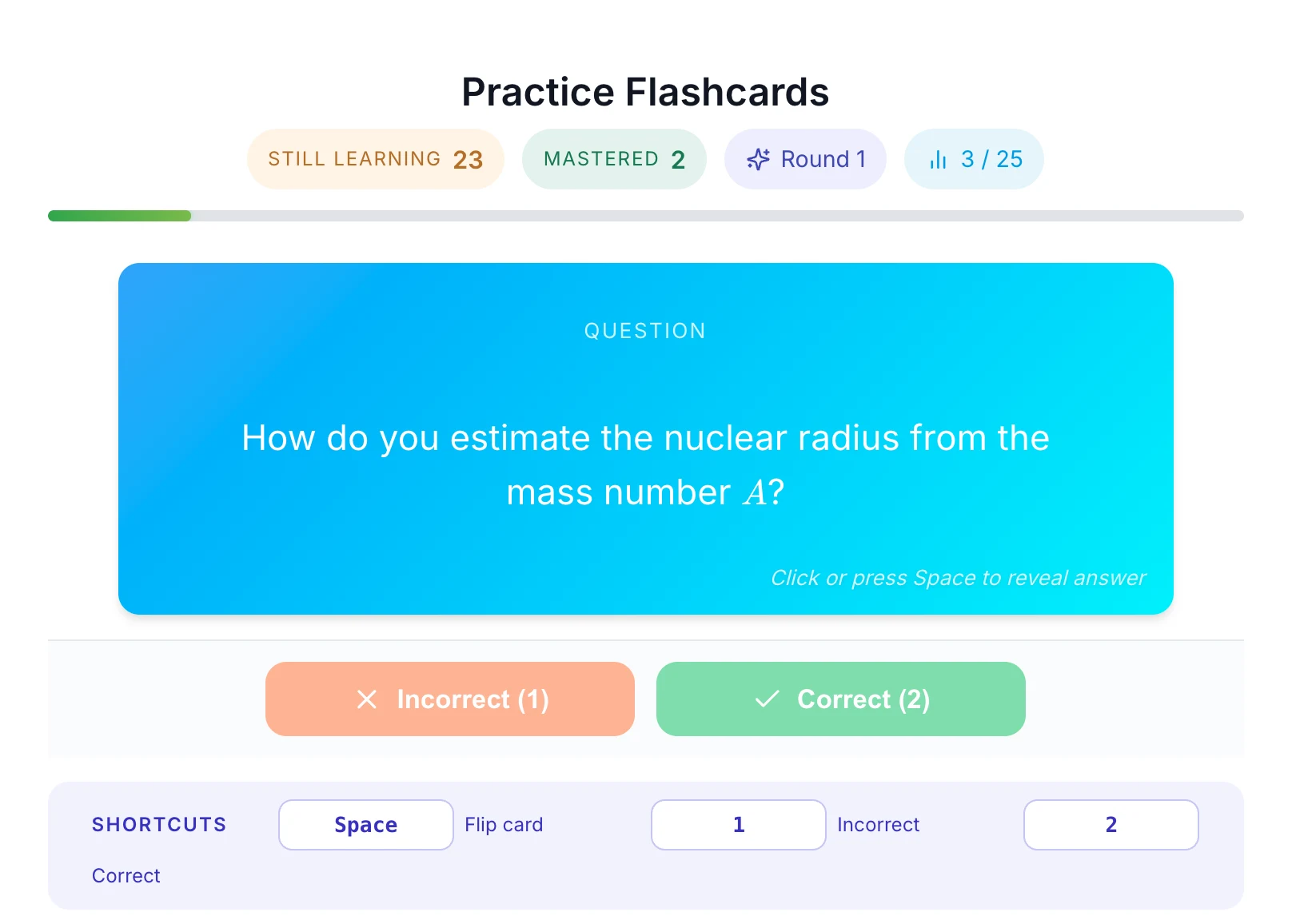
- at NDRC Founders’ Weekend
- 1st
- models orchestrated in the pipeline
- 5
- study formats: plans, guides, questions, cards
- 4
The idea
Most study tools stop at showing you information again. StudySmith starts where that ends: it takes your own notes and PDFs and builds an active learning loop around them, the kind a good tutor would run if they had infinite patience.
The principle is simple and well evidenced. People learn by doing the hard recall, reflecting on what they got wrong, and revisiting it on a schedule, not by rereading. StudySmith scaffolds exactly that: deliberate practice, reflection, and spaced mastery, applied to whatever you are actually studying.
A path, not a pile
Drop in your material and StudySmith maps it into topics, then lays out a study path: read, practise, quiz, review. Each node is a deliberate step, sequenced so the work lands just past what you can already do.
A projected-readiness signal tracks how prepared you are for the thing you are actually working towards, so the next session is always the one that moves the needle most.
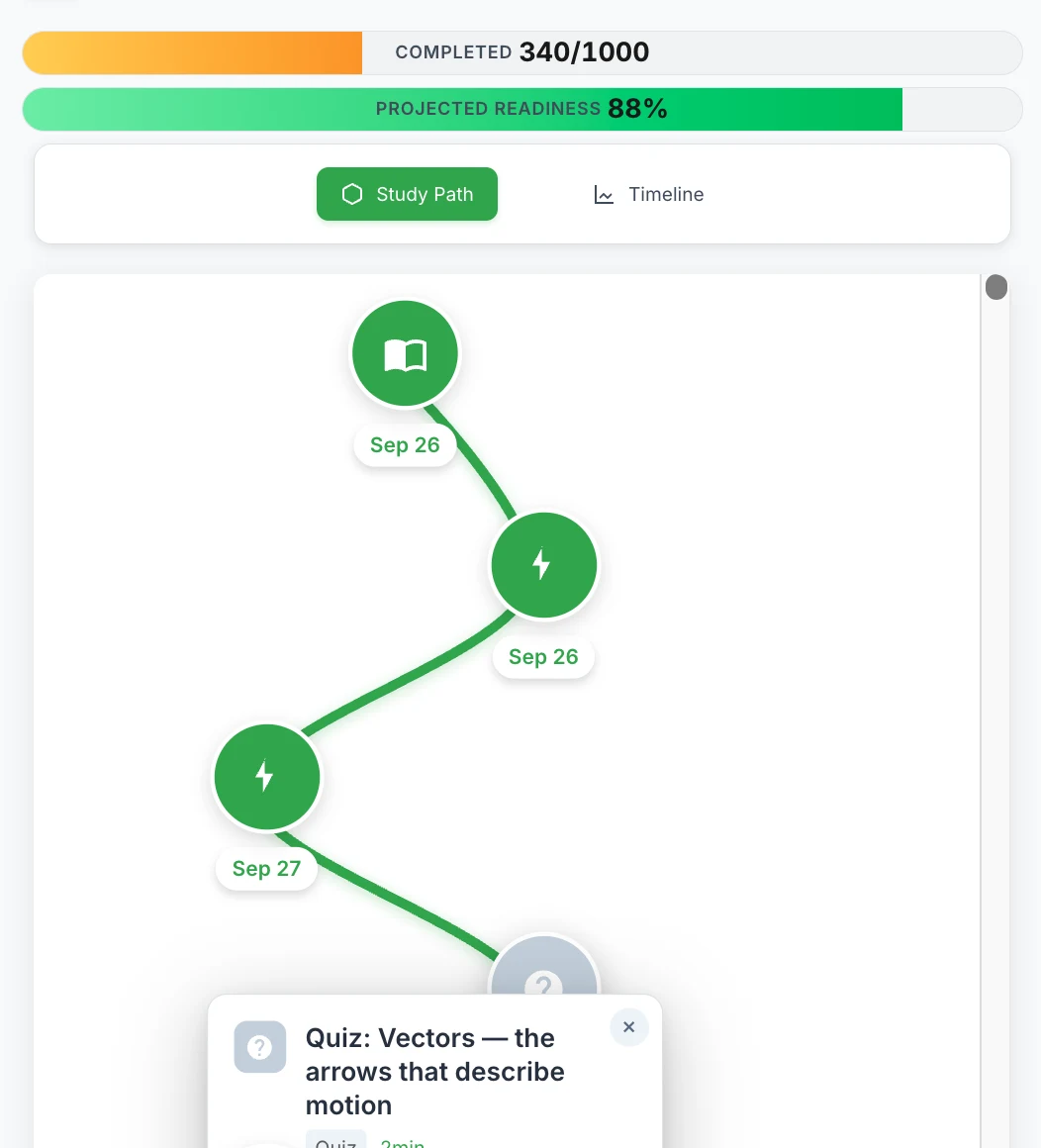
The study path sequences reading, practice, and quizzes into deliberate steps.
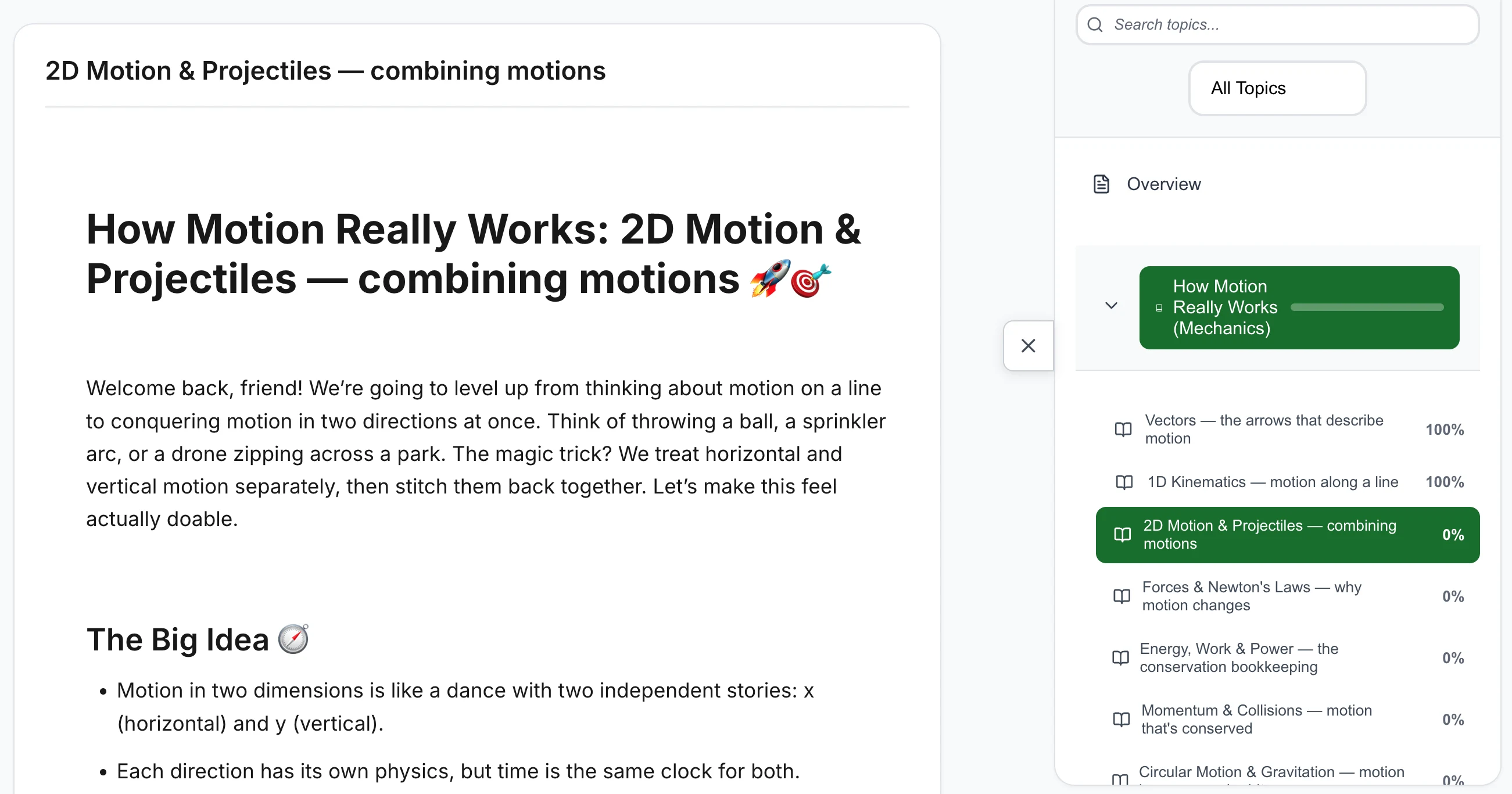
Generated subject guides explain a topic in plain language, with a mastery-tracked topic tree.
Guides that teach, then check
StudySmith generates a guide for each topic that explains the idea conversationally, then hands you straight into practice. The topic tree alongside it shows mastery per topic, so reflection is built into the interface rather than left to willpower.
The same material drives the practice question bank: exam-style questions tied back to the topics you have covered, so every question is deliberate rather than random.
A multi-LLM pipeline
Turning a messy PDF into a coherent course is not a single prompt. StudySmith runs a pipeline across two providers and five models, routing each step to the right tool: fast, cheap models for extraction and expansion, and a stronger model for the validation pass that checks the output before it reaches you.
Splitting the work this way keeps quality high where it matters and cost low everywhere else, which is what lets the whole thing run as a product rather than a demo.
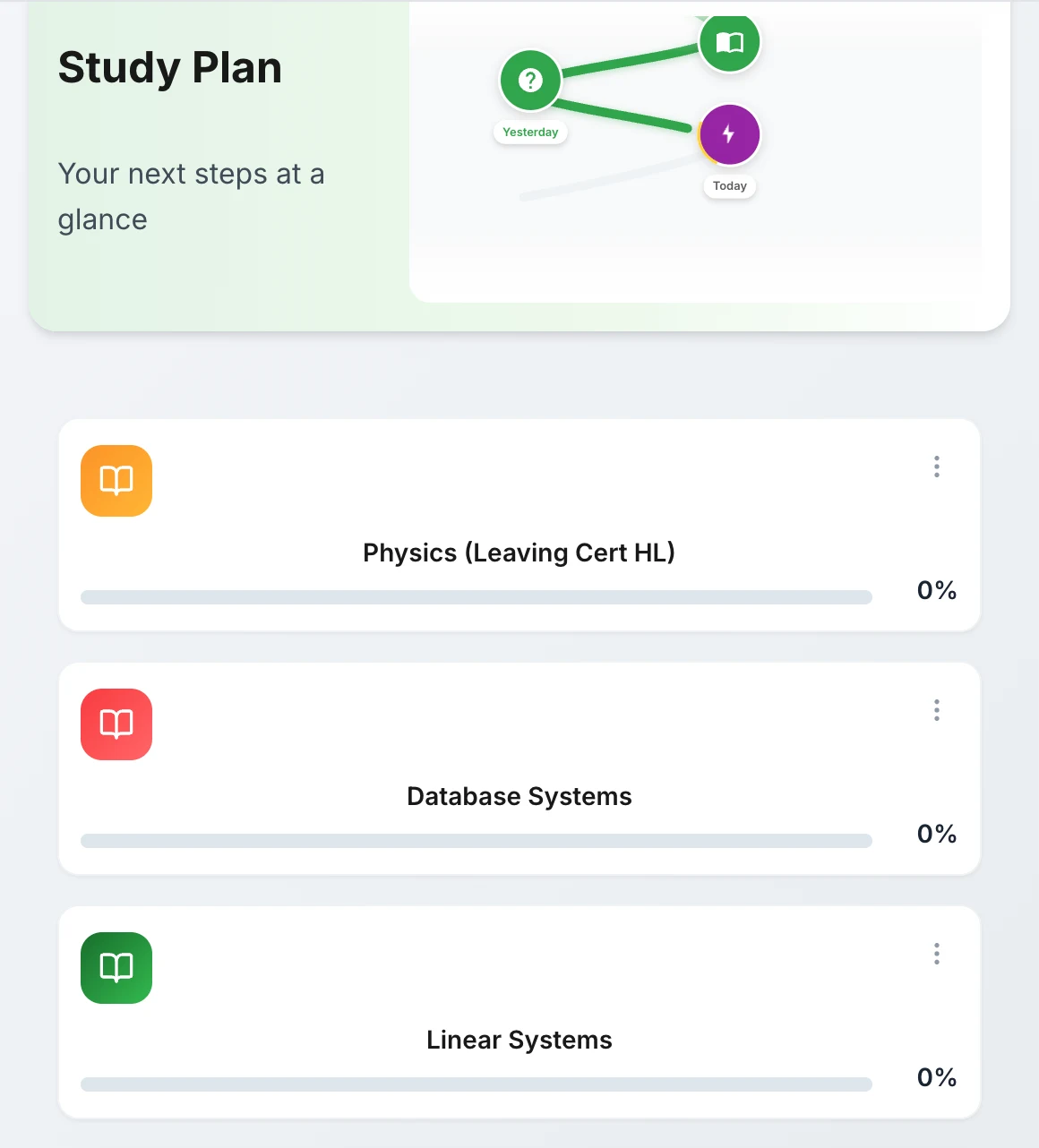
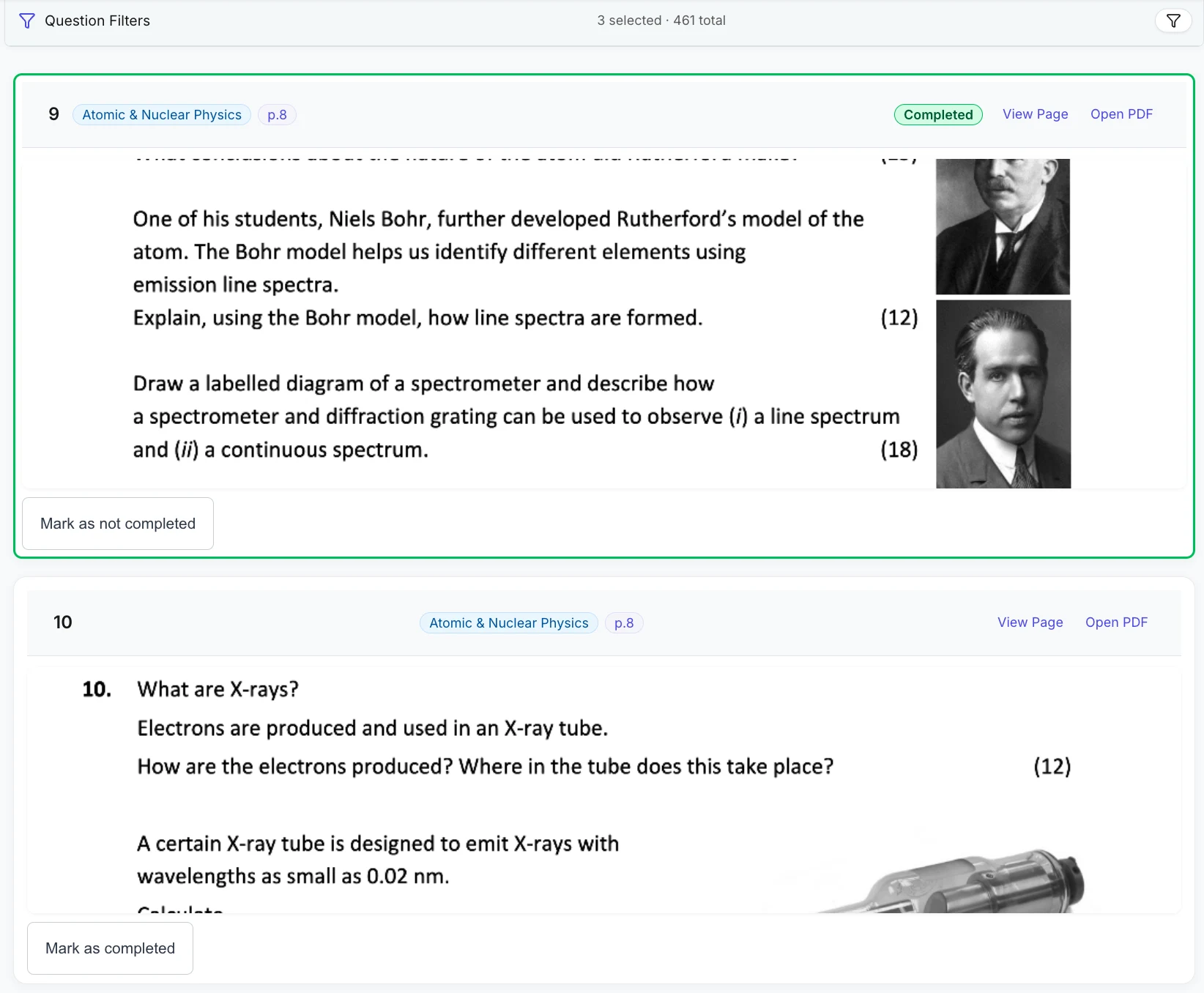
One plan, many subjects: StudySmith handles whatever you throw at it, from Leaving Cert physics to university modules.
Inside the product
NDRC Founders’ Weekend
StudySmith won NDRC Founders’ Weekend, the pitch event run by Ireland’s national digital research centre accelerator. It was a vote of confidence not just in the demo, but in the thesis: that scaffolded, evidence-based learning beats yet another flashcard app.