Fintech, financial literacy
UCASH
Budgeting for students who were never taught money: income, weekly budget, spending, and the next thing to do, all in one view.
- Work in Fintech Summit 2025
- 1st
- spending categories tracked
- 10
- guidance routes in one app
- 5
The problem isn’t the apps
Students don’t arrive at university short of banking apps. They arrive short of defaults and guidance. Nobody taught them what rent should be against their income, what counts as overspending, or what to actually do about it. A balance and a transaction list answer none of that.
UCASH treats financial literacy as a product problem rather than a course. It starts you with sensible budgets, watches where the money goes, and turns the gaps into plain next steps. The point is to make the responsible choice the easy one.
It tells you what to do next
Most budgeting tools stop at the chart. UCASH reads your spending and surfaces a short, ranked list of recommended actions: you’re over budget here, you may be eligible for these scholarships, this is where part-time work or a student card could help.
Each action is a single tap into the part of the app that handles it, so the insight and the fix live in the same place instead of becoming homework.
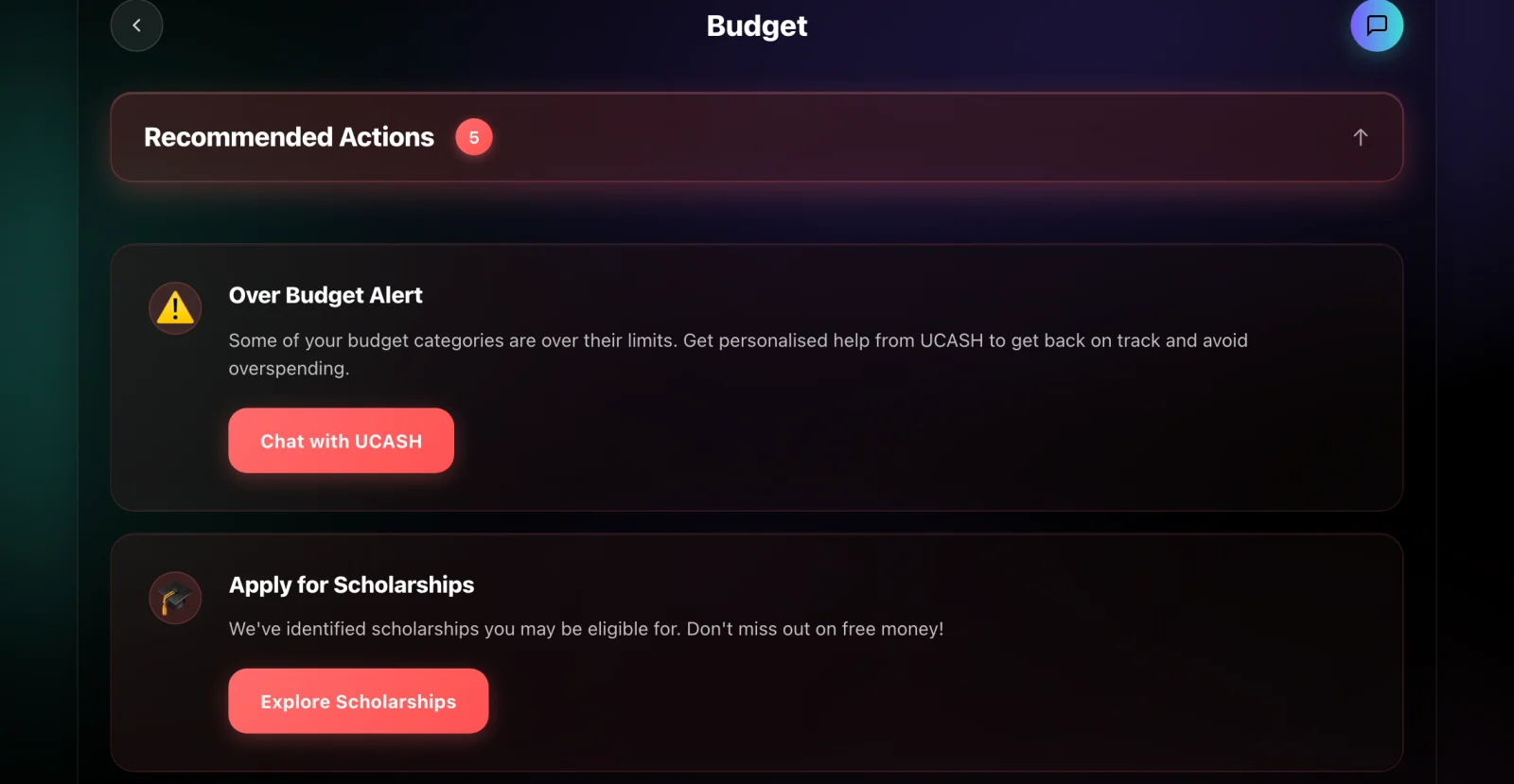
The recommended-actions panel: every insight comes with a button that does something about it.
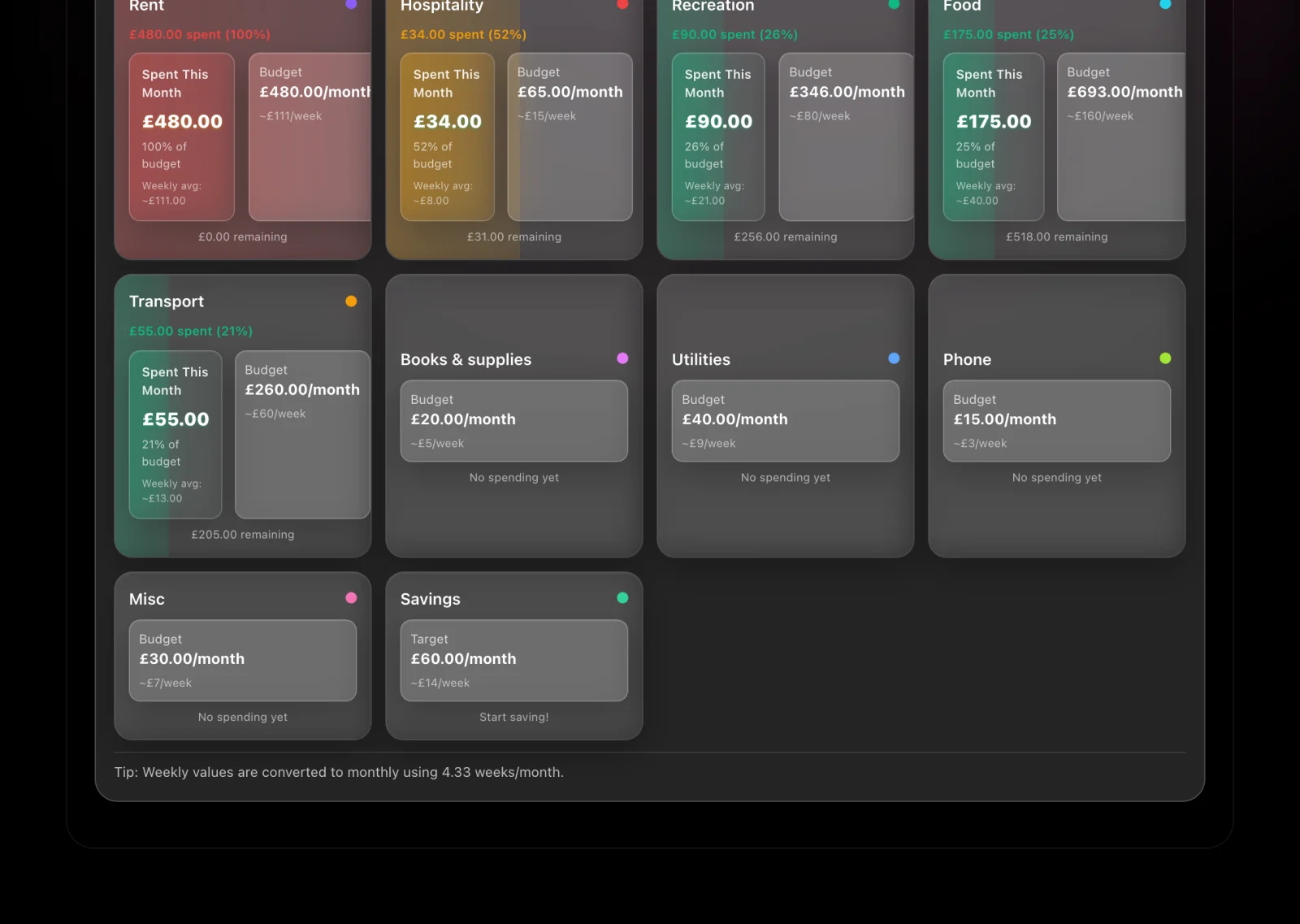
Ten student-shaped categories, each showing spent against budget, with weekly amounts converted to monthly automatically.
Categories built for student life
The categories are the ones students actually deal with: rent, food, transport, hospitality, recreation, books, utilities, phone, misc, and savings. Each card shows what you’ve spent against the budget and what’s left, colour-coded so an overspend is obvious at a glance.
Hospitality runs on a weekly budget because that’s how a night out gets decided, and weekly figures are converted to monthly so the totals still line up.
Finding the money, not just tracking it
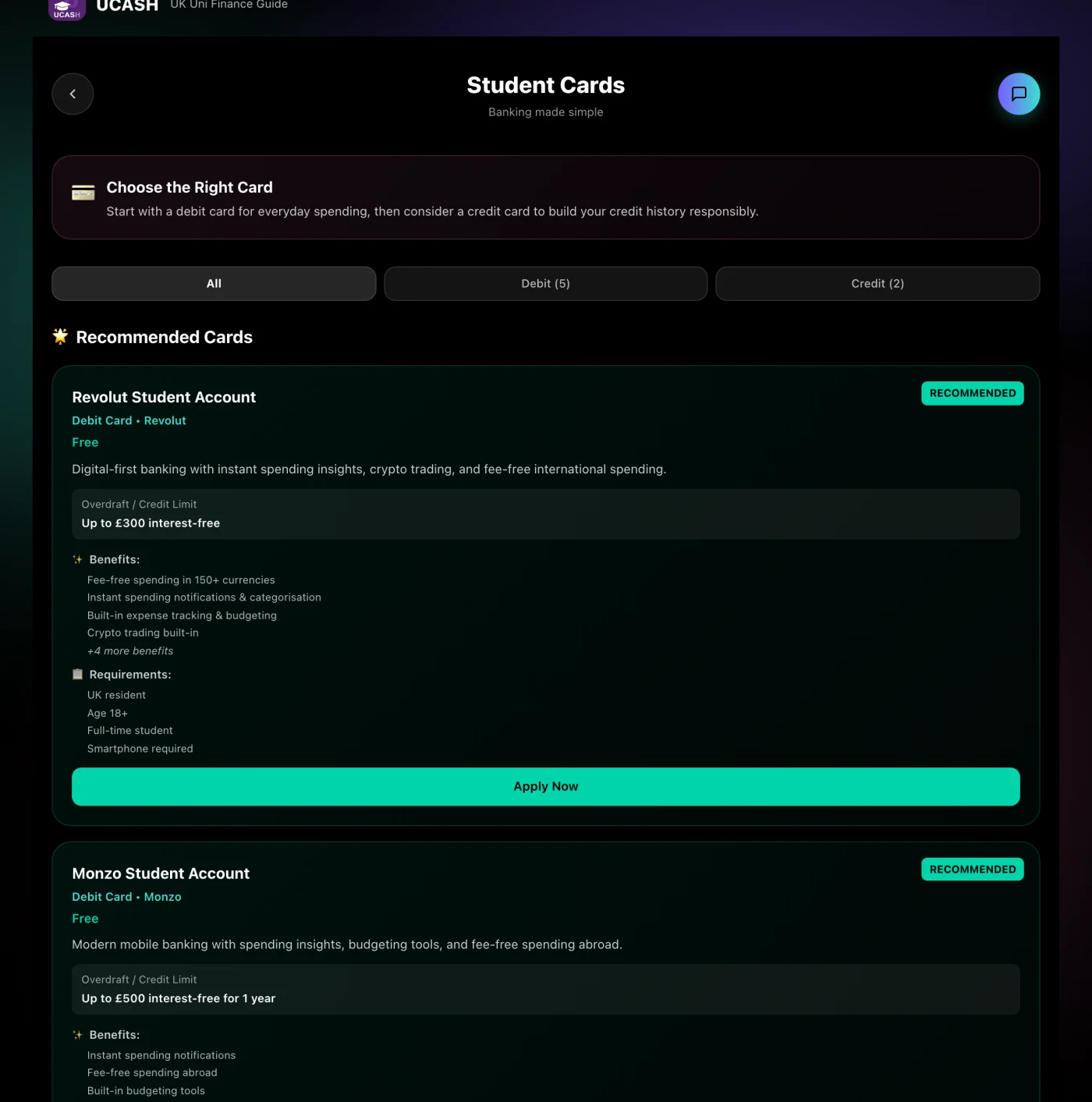
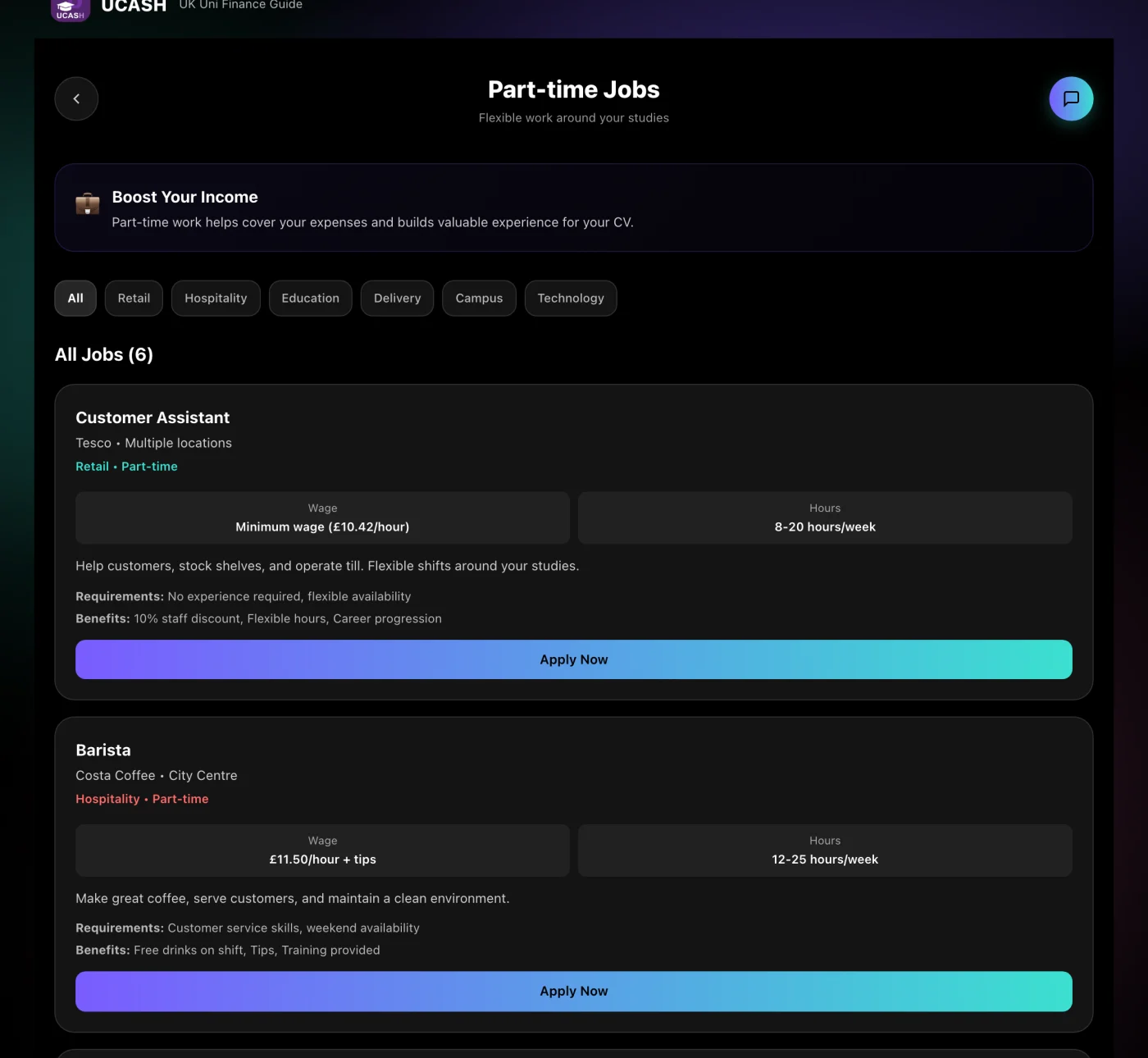
The harder half of student finance is income, so UCASH carries the routes to more of it: a scholarship and bursary list, a board of part-time jobs with realistic hours and pay, a plain-English guide to student loans, and a comparison of student bank accounts and cards for building credit responsibly. A voice and text assistant ties it together and can update your budget as you talk.
Work in Fintech Summit
UCASH was entered into the Work in Fintech Summit 2025 in London and won, judged on the product and the case for it: a clear problem, a financially literate default for students, and a path from insight to action.
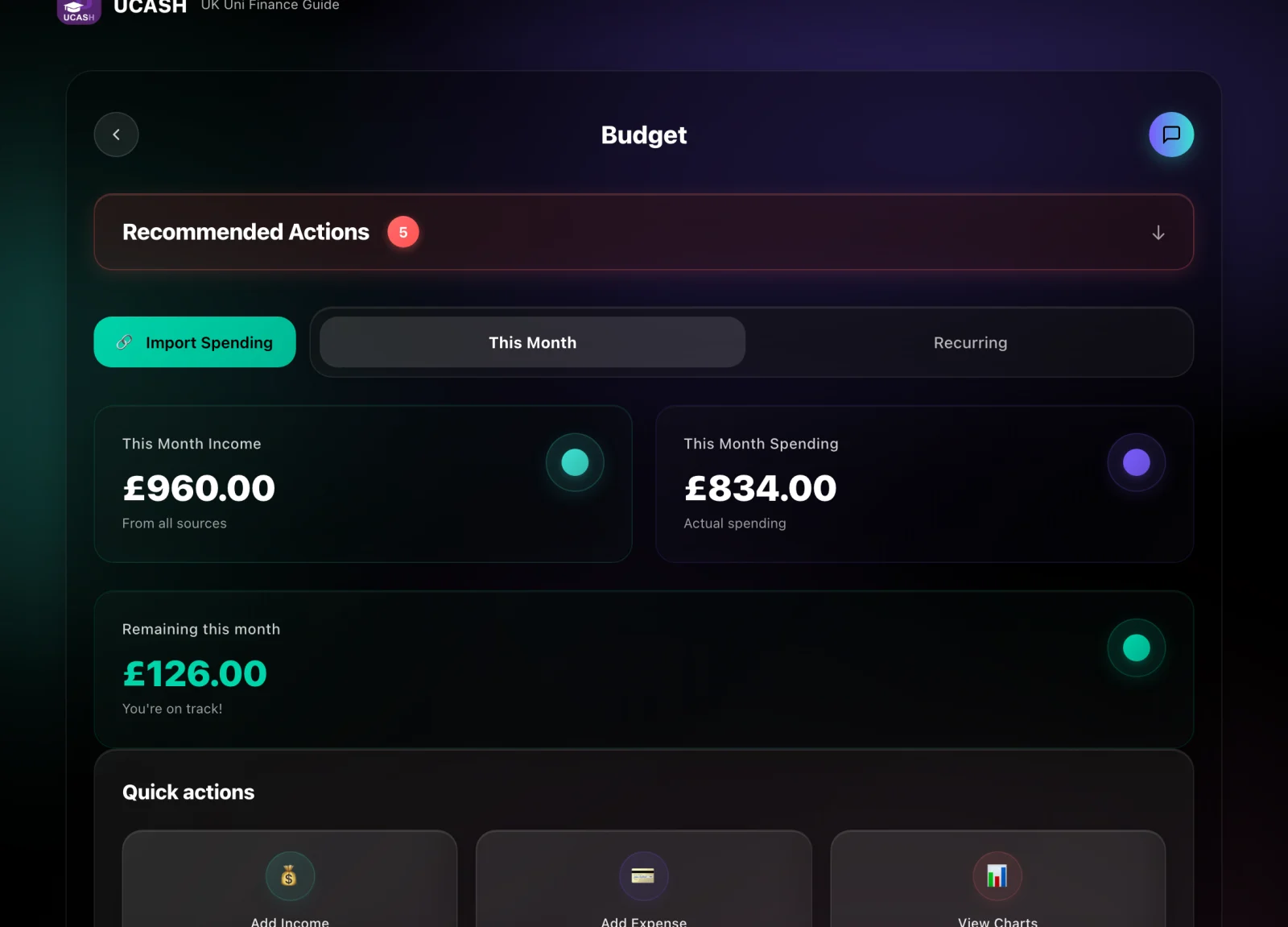
The view the judges saw: the month, the gaps, and the next move on one screen.